

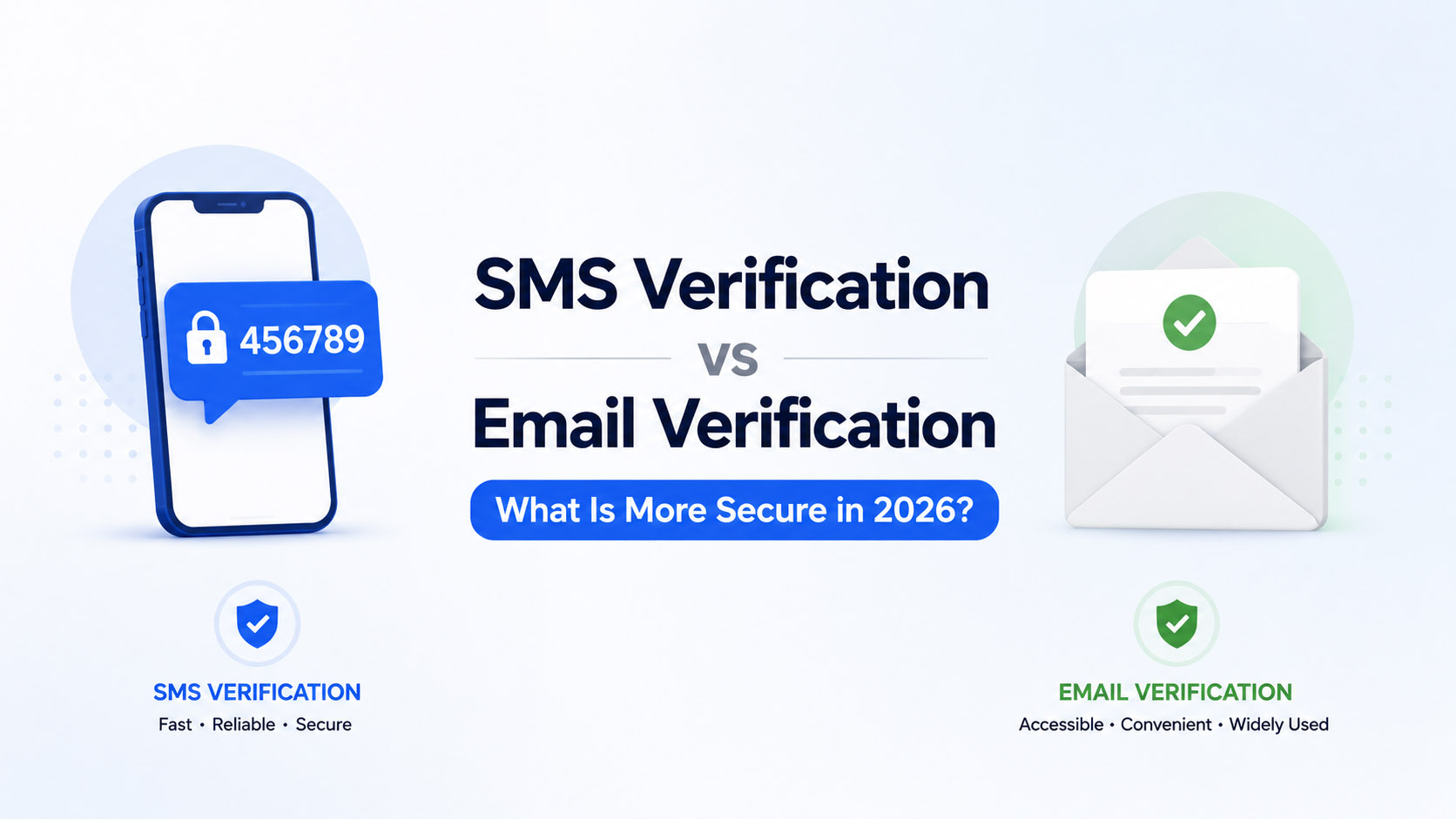
User verification has become a critical part of online security. Whether you are creating a new account, recovering a password, or confirming a transaction, platforms need a way to ensure that you are the legitimate owner of the account. The two most common methods are SMS verification and email verification.
Email verification has been used for decades. It is simple, inexpensive, and easy to implement. Most users already have one or more email addresses, making email verification a convenient option for many services. However, email accounts are frequent targets of phishing attacks, password leaks, and unauthorized access attempts.
SMS verification provides an additional layer of trust because it requires access to a phone number. In many cases, receiving a code on a mobile device is considered more secure than relying solely on an email address. This is one of the reasons why banks, financial platforms, marketplaces, and social networks continue to use SMS verification.
In 2026, security systems rarely rely on a single verification method. Many services combine email and SMS verification to improve protection. Even if an attacker gains access to an email account, they may still be unable to access a phone number required for SMS confirmation.
Another important factor is user behavior. Many people use the same password across multiple websites, increasing the risk of email account compromise. Phone numbers, on the other hand, are generally more difficult to duplicate at scale, making SMS verification an effective tool against automated registrations and bot activity.
For users concerned about privacy, temporary numbers have become a popular solution. Instead of using a personal phone number for every registration, users can choose services such as SMS2MAX to receive SMS verification codes through temporary numbers intended for short-term use.
Both verification methods have strengths and weaknesses. Email verification is often more convenient and works internationally without mobile network limitations. SMS verification provides stronger identity assurance and remains one of the most trusted verification methods used by major platforms.
Security experts generally agree that combining multiple verification methods offers the highest level of protection. As cyber threats continue to evolve, businesses are increasingly adopting layered authentication strategies that include email, SMS, behavioral analysis, and device recognition.
In 2026, the question is no longer whether SMS verification or email verification is better. The real goal is using the right combination of security tools to protect user accounts while maintaining a smooth user experience.
