

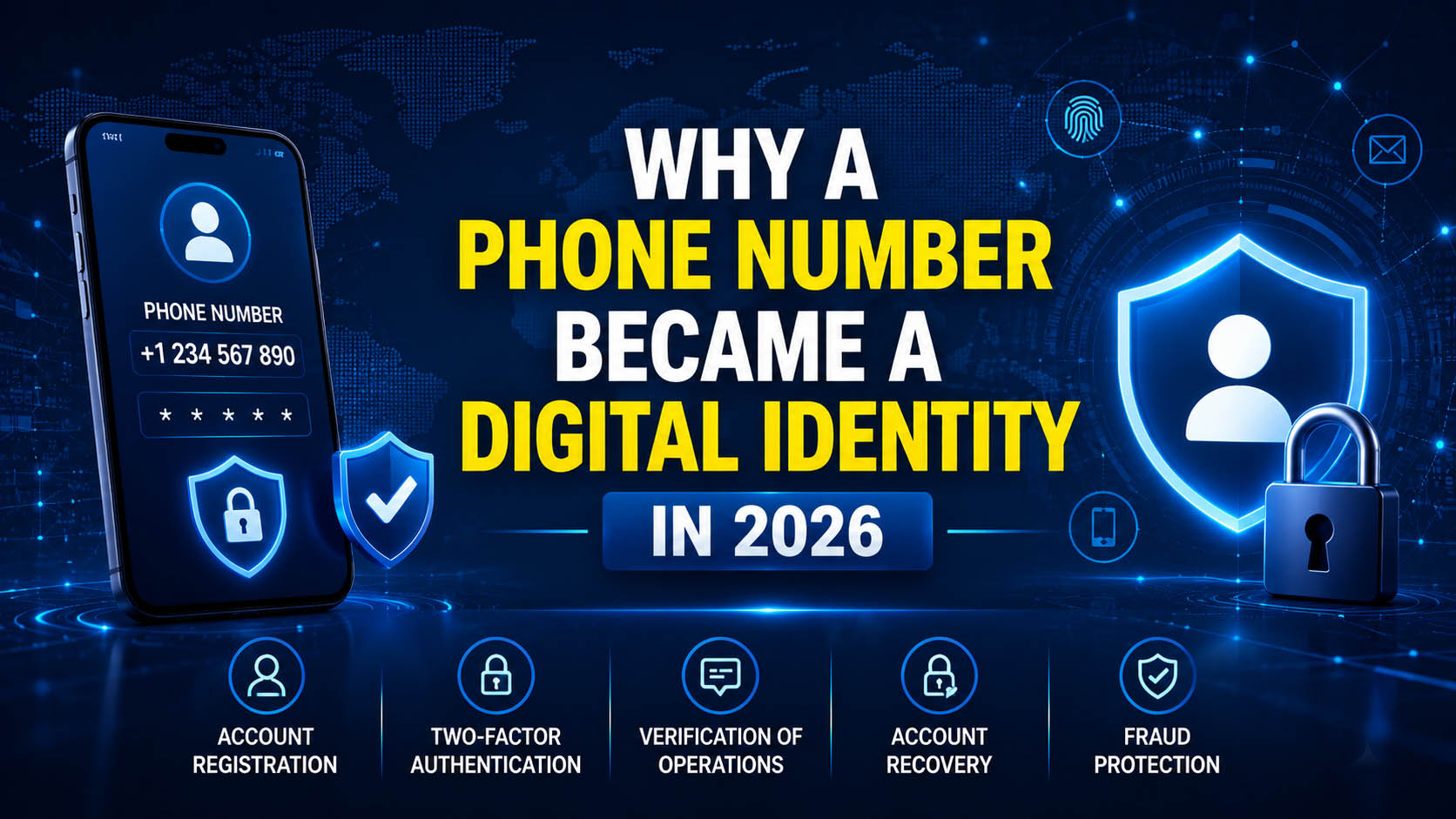
Over the past few years, the digital world has changed dramatically. While email addresses were once the primary way to identify users online, phone numbers have become the preferred verification method for many modern platforms. In 2026, a phone number effectively serves as a digital passport across the internet.
Online services increasingly rely on phone numbers for registration and identity verification. Unlike email addresses, phone numbers are more difficult to create in large quantities, making them useful for preventing bots and fraudulent accounts. In addition, users tend to keep the same phone number for much longer than they keep the same email address.
Today, phone numbers are used for account creation, two-factor authentication, transaction confirmation, password recovery, and fraud prevention. A single number may be connected to dozens of different services, making it one of the most important pieces of a person's digital identity.
However, this also creates new risks. The more services connected to one phone number, the greater the chances of data leaks, spam, phishing attempts, and account recovery attacks. This is why users are becoming more selective about where they share their phone numbers.
In 2026, many people choose temporary numbers for one-time registrations and verifications. This approach helps protect personal contact information, reduce unwanted marketing messages, and separate personal activity from online registrations. This is the principle behind SMS2MAX, a service that provides temporary phone numbers for receiving SMS messages without calls or long-term association with a personal identity.
Industry experts believe that phone numbers will remain one of the primary methods of digital identification for years to come. Even as biometric systems, digital IDs, and passkey technologies continue to evolve, SMS verification remains widely used across the world.
To protect your digital identity, it is recommended to avoid using your primary phone number for untrusted services, enable two-factor authentication whenever possible, monitor where your number is registered, and use temporary numbers for one-time tasks.
In 2026, a phone number is far more than a communication tool. It has become a critical part of a person's digital identity. Protecting it is now an essential element of online security and privacy.
